This lesson was created as a collaboration between The Asian American Education Project (AAEdu) and The Sikh Coalition. All lesson plan content is owned by AAEdu and The Sikh Coalition. Users agree to attribute work to AAEdu and The Sikh Coalition.
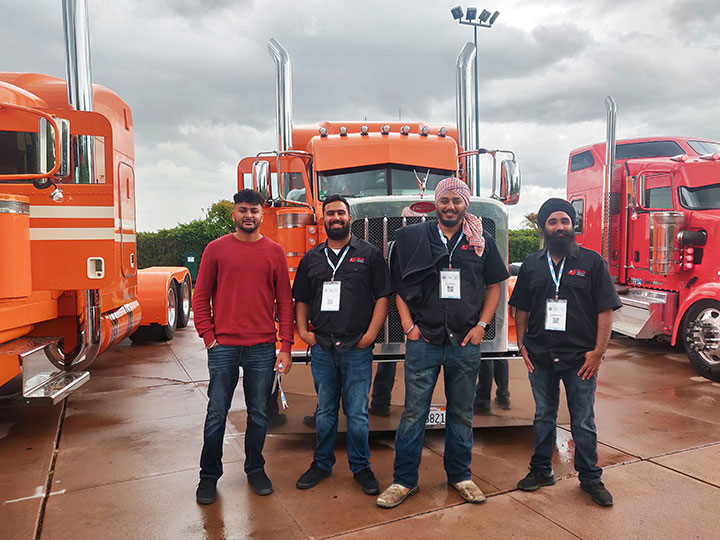
Truckers at the American Trucking Show in Fresno, California in 2022.
Grade: 9-12Subject:
U.S. History, Social Studies, English Language Arts
Number of Activities: 4
Sikh Americans account for an estimated 20% of the country’s truck drivers. In this lesson, students will explore the role of Sikh truck drivers in the United States. They will learn about the significant contributions to the industry, challenges faced, and key beliefs of Sikhism that can impact experiences by Sikh American truckers. They will examine the conditions of Sikh immigration and settlement in the United States and understand the factors that lead Sikh immigrants to pursue trucking as a means to make a living and build community in the United States.
Students will:
- Explain the significant presence of Sikhs in the American trucking industry.
- Examine the experiences, contributions, and challenges of Sikh truckers.
- Analyze how Sikh truck drivers maintain their faith and cultural identity on the road.
- Create a proposal to address challenges Sikh truckers face at work.
On The Road: Sikh American Truck Drivers Essay:
Sikh Immigration to the United States
Sikhs are followers of the
Sikhism religion. Sikhs began immigrating to the United States in the late 1800s. They sought better economic opportunities by escaping hardships in India. Most Sikhs came from
Punjab in northern India, where they worked as farmers. Many settled in California. They worked in farming, railroads, and lumber mills. Throughout the 1920s and 1930s, Sikh immigrants moved along the West Coast. Large communities formed in California’s Central Valley and Imperial Valley. In these regions, Sikhs were able to utilize their farming skills to find work in the agriculture industry. In the decades to come, a large Sikh community further established itself in the Central Valley. Sikhs started the first Sikh house of worship in Stockton, California in 1912. This
gurdwara* became an anchoring institution for both Sikh American and other Asian American communities to gather. The Sikh community created a sense of belonging. They shared employment opportunities, essential care, and more.
In the 1980s there was another increase in Sikh immigration to the United States. Anti-Sikh policies and violence were growing in Punjab. On June 1, 1984 the Indian Army launched an assault on Darbar Sahib (also known as the Golden Temple in Amritsar, Punjab) and dozens of other gurdwaras. Thousands of Sikhs were brutally murdered. Their homes and businesses were looted and burned. Entire families were destroyed in
state-sanctioned violence. These organized mobs, often with political backing, specifically targeted Sikhs. Many Sikhs were forced to flee their homes, seeking refuge in safer regions or abroad. They did not trust the government to protect them. This widespread violence and
persecution continues to haunt the Sikh community. Upon arriving in the United States, these newer immigrants settled where the previous generations had already established community
infrastructure. The trucking industry was an extension of the agricultural industry. As such, Sikh immigrants obtained jobs as truckers. These jobs offered independence, steady income, and flexibility.
Sikhs and the Trucking Industry
The trucking industry is a significant part of the American
economy. In 2022, trucking contributed $588 billion to the country’s
Gross-Domestic Product (GDP). Trucks move over 70% of the nation’s freight by weight. About 70% of food transportation within the country is moved by truck. An estimated 8.5 million people are employed in jobs related to trucking. About 3.55 million work as truck drivers.
Sikhs account for an estimated 20% of the country’s truckers. By 2019, there were more than 150,000 Sikh truckers in the United States. More than 30,000 Sikhs had entered the trucking industry in California. They continue to make up an estimated 40% of the trucking industry.
Several factors led to the increase of Sikh Americans working in the trucking industry. First, there is a large demand for truckers. Trucking companies have a very high turnover rate of 95%. Each year they need to replace almost all of their workforce. Truck driving is a challenging job and so not many people do it long-term. Second, the demand for drivers has also been driven by the rise in
e-commerce and consumer expectations. Customers rely on having their goods shipped to them. This constant demand for shipped goods creates employment opportunities for new immigrants. Third, trucking appealed to many Sikh Americans due to its compatibility with their faith and traditions. One of the five Sikh
articles of faith is
kesh, or unshorn hair. Many jobs require workers to cut their hair and beards as a safety standard. But trucking does not have such requirements. In addition, many Sikhs wear a
turban** (also called
dastaar) to cover their hair and assert their commitment to their faith. As truck drivers, Sikhs are generally able to wear a turban. Fourth, trucking does not require fluency in English. This makes it accessible to many immigrants, including Sikhs. Lastly, truck driving also has a flexible schedule, allowing Sikhs to pray when they want. Some Sikhs also see trucking as a continuation of their history in the agriculture industry.
As mentioned, life on the road includes many challenges. Trucking involves long hours, with the average driver working 60-70 hours a week. Truckers often spend extensive stretches of time away from home and family. They face safety concerns being constantly on the road. For Sikh truckers, additional challenges include maintaining hair (kesh) on the road, locating places to pray, and finding food for those who are vegetarians. Some of the factors that make truck driving appealing to Sikhs pose challenges as well. For example, while trucking generally does not require fluency in English, drivers do sometimes face language barriers at truck stops. In addition, while truck driving supports religious freedom by allowing Sikhs to have uncut hair and wear turbans, drivers also faced faith-based discrimination. This discrimination intensified after the September 11, 2001 (9/11) attacks on the United States. There was an increase in
Islamophobia across the country that targeted Muslims, Arab Americans, and South Asian Americans. Sikhs were being targeted due to their turbans. They faced hate crimes and discrimination on and off the job.
In more recent years, there have been some shifts in the roles of Sikhs in the trucking industry. A growing number of Sikh women have been entering the trucking industry. In addition, Sikh truckers have begun owning trucking businesses and companies. This has occurred through the combination of community support, entrepreneurial spirit, and hard work. Many Sikh entrepreneurs began as truck drivers. They gained years of experience. They learned about the industry. Over time, and after saving up money, they built strong community networks to start their own companies. Owning a business allowed them to create more opportunities for other Sikhs and immigrants. Through this, they helped to support their communities while also contributing to the economy.
Sikhs have also shaped the trucking industry in roles outside of driving trucks. The I-40 corridor that runs east from California is a prominent trucking route. There are now many vegetarian and Punjabi restaurants along the highway. Sikhs have also opened truck stops that include a gurdwara. They also opened trucking schools, companies, truck washes, and truck stops.
Sikh truckers have also become leaders in this industry, taking on labor organizing. In 2004, 250 truckers in Stockton, California organized a
strike to protest low wages. Most were Sikh. However, other communities participated as well, including Latino, Filipino, Fijan, Cambodian, Middle Eastern, Black, and White truckers. Truckers are required to pay for their own gas. They were impacted by rising gas prices. In addition, truckers are not paid for the time they are waiting for a load to be unloaded. The strike fought against these unfair practices. As a result, the trucking company agreed to an increase in rates and to reduce the maximum unpaid wait time to one hour. Following the success of the strike, many of the truckers joined the Industrial Workers of the World (IWW). The IWW is an international labor union run by members across many different industries.
From their early days as farmers to their current rise as truckers, Sikh Americans have made valuable contributions to the United States.
*A gurdwara is a Sikh house of worship where the community gathers for prayer, selfless service, and to learn from each other. The central focus of the gurdwara is the Guru Granth Sahib, the central holy religious scripture of Sikhism. Services consist of reading and singing from the sacred scripture. Every gurdwara also serves a meal called Langar, free of charge, prepared by volunteers. The Nishaan Sahib, a saffron-colored flag, flies from every Gurdwara to denote the presence of the Sikh community.
**A Turban, or dastaar, is an integral part of Sikh identity, in addition to the five articles of faith. It is worn by Sikh males, and some females. It covers, protects and crowns the head, which is the center of wisdom. The dastaar safeguards the uncut hair of a Sikh, which is tied in a topknot underneath. It is not put on or taken off like a hat or cap, but tied anew daily. To ask for it to be removed inconsiderately in public is demeaning and disrespectful to the wearer.
Bibliography:
Freeze, Joshua. “After Two-Day Walkout, Rail Yard Drivers Win Demands.” Labor Notes, Issue 307 p. 5, Labor Education and Research Project, Oct 2004.
Welch, Adam. “Scaring the Crap Out of the Company; Stockton Truck Drivers Strategize at the Temple.” Clamor, Issue 30, p. 74, Clamor Magazine, Jan/Feb 2005.
- Articles of faith: five firmly held beliefs in Sikhism worn as a symbol of their commitment to their faith which include: Kesh (uncut hair), Kirpan (religious sword), Kara (metal bracelet), Kanga (comb), and Kaccha/Kachera (under-shorts)*
- E-commerce: commerce conducted via the Internet
- Economy: the structure or conditions of life in a country, area, or period related to the production, distribution, and consumption of goods and services
- Freight: goods to be shipped
- Kesh: uncut hair, one of the five Sikh articles of faith*
- Gross-Domestic Product (GDP): a comprehensive measure of U.S. economic activity; GDP measures the value of the final goods and services produced in the United States**
- Gurdwara: Sikh house of worship where the community gathers for prayer, selfless service, and to learn from each other*
- Infrastructure: the underlying foundation or basic framework
- Islamophobia irrational fear of, aversion to, or discrimination against Islam or people who practice Islam
- Persecution: the act or practice of harassing or punishing, especially those who differ in origin, religion, or social outlook
- Punjab: an area in northern India that has been partitioned since 1947 between India and Pakistan
- Sikhism: a religion that started in South Asia over 500 years ago; it is the fifth largest religion in the world
- State-sanctioned: approved by the state or government
- Strike: a work stoppage by a group of workers to enforce compliance with demands made on an employer
- Turban (Dastaar): head covering worn by Sikh males, and some females*
- When did Sikhs begin migrating to the United States?
- What factors led to Sikh immigration to the United States?
- What work did early Sikh immigrants find? How did they use their skills and expertise in this work?
- Why is the trucking industry a significant part of the American economy?
- What factors led Sikh Americans to work in the trucking industry?
- What role did the community infrastructure and networks established by previous generations of Sikh immigrants play in helping Sikhs establish themselves in the trucking industry?
- How is trucking compatible with Sikh faith and traditions? How is it incompatible?
- What are some benefits of truck driving to Sikh Americans?
- What are some challenges that Sikh truck drivers face?
- How have Sikhs shaped the trucking industry in roles other than driving?
- How have Sikh truckers been involved in labor organizing and what is the significance of such organizing?
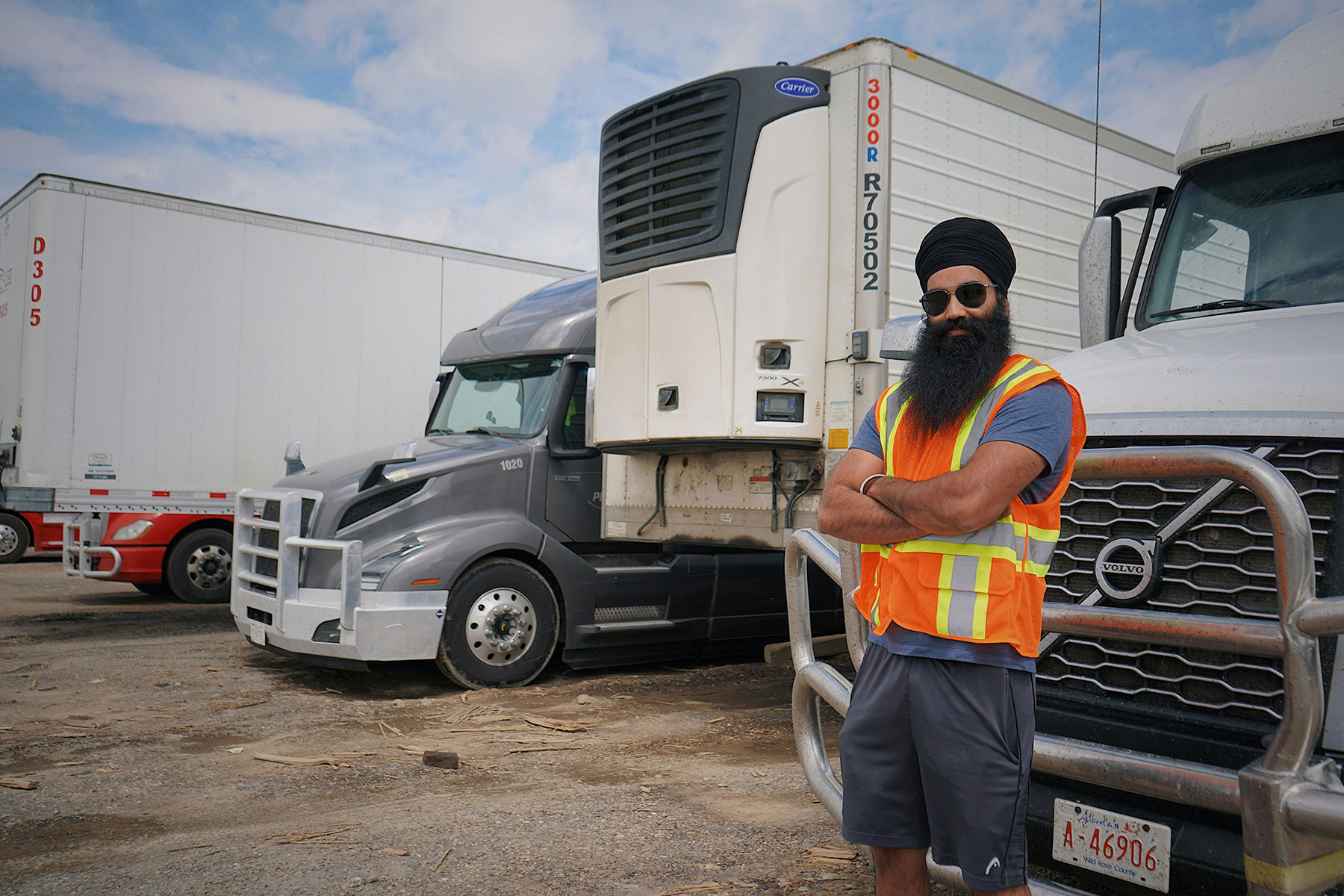
Sikhs account for an estimated 20% of the country’s truckers.
Credit: Photo by World Sikh Organization of Canada from Pexels (Free to use)
Activity 1: Accessing Prior Knowledge about Sikhism
- Distribute the handout entitled, “Sikhism as a Religion and Cultural Identity.”
- Have students complete Part 1 by writing what they currently know about Sikhism.
- Have students complete Part 2 by reading the text. Encourage students to annotate by marking key points, parts that stand out to them, parts that they have questions about, and/or paraphrasing in their own words in the margins.
- Have students complete Part 3 by writing the top three things that resonated with them after reading the text.
- Have students complete Part 4 by explaining how learning more about Sikhism may have reduced any biases or misconceptions they may have previously held.
- Facilitate a discussion by asking the following question: “What are important considerations for employers to make to ensure they create a safe and inclusive workplace free from discrimination for Sikh employees?”
- Summarize common themes among the students’ responses.
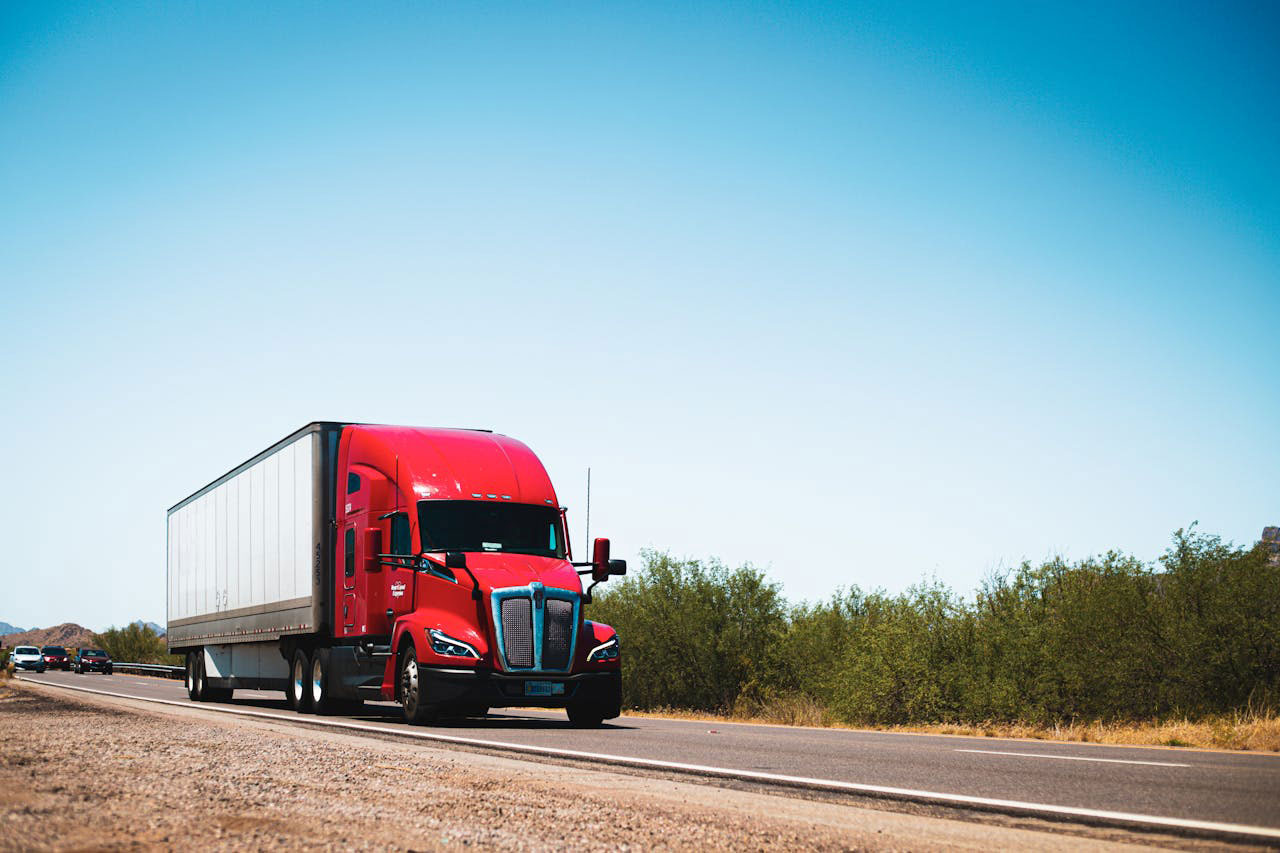
“Kenworth T680 Semi-Trailer Truck Driving Down the Road.” The trucking industry is a significant part of the American economy. Trucks move over 70% of the nation’s freight by weight.
Credit: Photo by Tom Jackson from Pexels
Activity 2: Learning about Sikh Truck Drivers
- Have students read the essay. Consider the following options:
- OPTION 1: Have students read the essay independently either for homework or during class time.
- OPTION 2: Read aloud the essay and model annotating.
- OPTION 3: Have students read aloud in pairs or small groups.
- Facilitate a class discussion by asking students the Discussion Questions.
- Distribute the worksheet entitled, “Historical Causation.” Have students use the lesson essay to complete the worksheet. Have students add additional boxes if needed.
- Have students list causes of the growth of Sikh Americans in the trucking industry in the boxes on the top half of the page.
- Have students list effects of the growth of Sikh Americans in the trucking industry in the boxes on the bottom half of the page.
- Have students mark each box to categorize the cause/effect as one or more of the following:
- E - Economic (related to the production, distribution, and consumption of goods and services)
- P - Political (related to systems of power, government, or public affairs)
- C - Cultural (related to the ideas, customs, and social behavior of a society)
- S - Social (related to society, its organization, and how people interact or relate to each other)
- Have students mark each box to categorize the cause/effect as short, medium or long-term.
- ST - short-term
- MT - medium-term
- LT - long-term
Have students write a paragraph in response to the prompt: “What is the most significant cause of the growth of Sikh Americans in the trucking industry?” Have students support their argument with evidence from the lesson essay, or additional internet research as needed.
Activity 3: Examining the Story of Mintu Pandher
- Distribute the worksheet entitled, “Benefits and Challenges of Trucking.” Have students use the lesson essay to complete the T-Chart by listing benefits of trucking for Sikh truckers in the left column, and challenges of trucking for Sikh truckers in the right column.
- Have students read the article entitled, “Sikhs Turn To Trucking By The Thousands To Keep The Faith.”
- Have students write a Quickwrite after reading the article in response to the prompt: “How does this story reflect the Sikh value of seva (helping others)?”
- Facilitate a discussion by asking the following questions:
- How did Mintu Pandher get into the trucking industry?
- What does he see as the benefits of working in trucking?
- How does Pandher bring his Sikh heritage to his work and provide a culturally meaningful work environment to his workers?
- According to Pandher, how does truck driving align with Sikh values?
- What does Pandher’s story tell us about Sikh experiences in the trucking industry?
- Have students return to the worksheet entitled, “Benefits and Challenges of Trucking.”
- Have students highlight ideas they already wrote that are corroborated by the article about Mintu Pandher.
- Have students note if any of the ideas they wrote down are challenged by the article.
- Have students add additional notes to the chart using the article.

In Activity 4, students think about considerations for employers to make to ensure a safe and inclusive workplace for Sikh employees.
Credit: Photo by World Sikh Organization of Canada from Pexels (Free to use)
Activity 4: Creating a Proposal to Address Challenges Faced by Sikh Truckers
- Have students revisit the Quickwrite in Activity 1 responding to the prompt: “What are important considerations for employers to make to ensure they create a safe and inclusive workplace free from discrimination for Sikh employees?”
- Have students revisit the list of challenges faced by Sikh truckers that they wrote on the “Benefits and Challenges of Trucking” worksheet.
- Tell students the following: “Workplace considerations by employers can help address the challenges faced by Sikh truckers.”
- Have students write a proposal addressing the following prompt: “How can trucking companies and/or policymakers create safer and more inclusive workplaces free from discrimination for Sikh truck drivers?”
- Have students complete the worksheet entitled, “Proposal for Accommodating Sikh Truckers” to plan their proposal:
- Have students write their recommendation at the top of the chart.
- Have students respond to the following questions at the bottom of the chart:
- What challenge(s) does this recommendation address?
- Why is this important?
- How will this impact Sikh truckers?
- Have students consult the following resources to support their proposals:
- The Sikh Coalition: Trucker Know Your Rights and Legal FAQ
- The Sikh Coalition: Accommodating Sikhs in the Workplace: An Employer’s Guide
- Have students present their proposals to the class.
- Facilitate a discussion by asking the following questions:
- What are common themes across the proposals?
- Why is it important to create safe and inclusive workplaces that honor different religious and cultural identities?
- Have students research and learn about the JB Hunt Settlement, in which four Sikh truck drivers were subjected to religious discrimination by JB Hunt, one of the largest trucking companies in the United States, between 2008-2013. Have students research the case and its significance for Sikhs in the trucking industry.
- Have students watch the music video entitled, “Surjit Khan - Truck Union | Official Music Video | Headliner Records.” Have students write an analysis of the video reflecting on the purpose and message of the video.
- Ask students, “How do community networks play a role in helping immigrant groups establish themselves in new industries? What are other examples in which immigrant communities have similarly created strong representation?” Have students research other examples to learn how specific communities became established in certain industries. (For example, Vietnamese Americans with nail salons or Cambodian Americans with donut shops.)