5.1.2.2 - From Tragedy to Activism: The Case of Joseph Ileto
Trigger Warning: This lesson addresses White supremacist violence and hate crimes. It mentions murder and death. As such, it may be difficult to engage with this content. Readers/users are encouraged to attend to safety and well-being.
Grade: 9-12Subject:
U.S. History, Social Studies, English Language Arts Number of Lessons/Activities: 6
Overview:
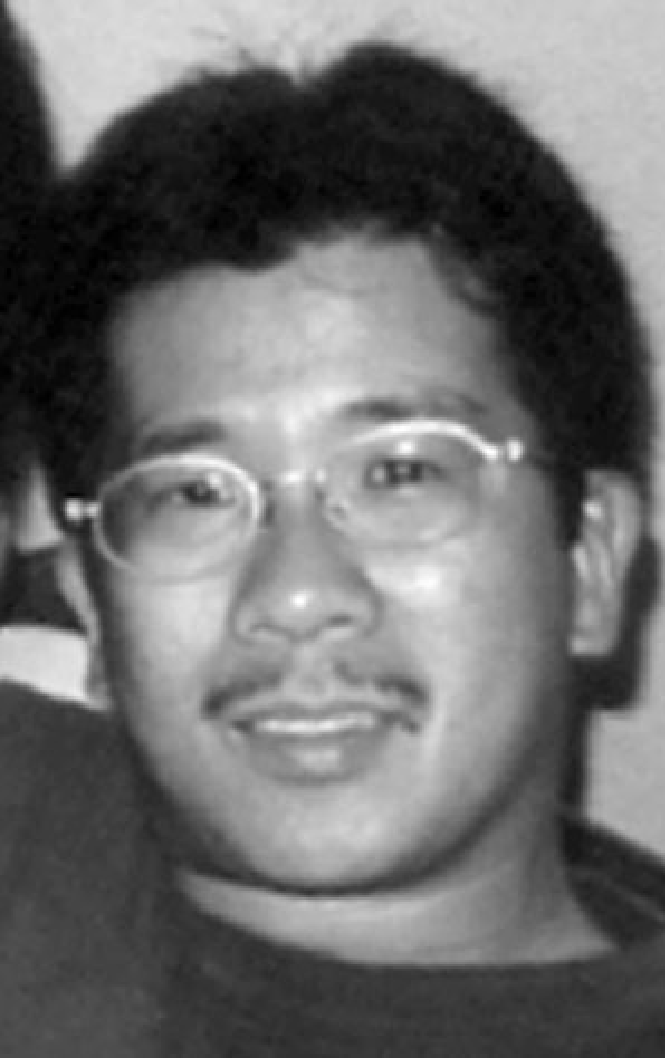
On August 10, 1999, Joseph Santos Ileto (1960-1999), a Filipino American postal worker, was murdered by Buford O. Furrow (born 1962) in a racially motivated hate crime in the Los Angeles area. Despite its tragic nature, Ileto's murder received minimal media coverage and public attention. This prompted his family to become anti-hate crime activists. In this lesson, students will learn how the Ileto family transformed tragedy to activism. They will examine how the Ileto family built multiethnic coalitions, advocated for comprehensive hate crime legislation, and worked to make Asian American victims more visible in national discussions about bias-motivated violence.
Lesson Objectives:
Students will:
Identify the impacts of hate crimes on communities.
Analyze the Joseph Ileto case in order to identify systemic factors that contribute to disparities in media coverage.
Describe the Ileto family's advocacy strategies in raising awareness about anti-Asian hate crimes.
Activity 1: Defining Social Change, Power, and Privilege
Ask students the following question: “What comes to mind when you hear “social change”?
Tell students the following statement: “Social change refers to alterations in social structures, institutions, behaviors, or cultural norms that affect how society functions. Social change can be gradual or rapid, positive or negative, intentional or unintentional.”
Have students engage in partner talk and brainstorm examples of social change. Display the following table for all to see and have students engage in partner talk to brainstorm 2-3 examples of historical or contemporary social change movements by completing the table:
What was the problem? What needed to change?
Who was involved? Who inspired the change? Who was leading the change?
What strategies were utilized? How was social change achieved?
What were the impacts of the efforts?
Tell students the following: “Anybody can make social change happen. Everyday/ordinary people include students, workers, community members, etc. On the other hand, institutional actors include government officials, corporate leaders, judges, principals, etc. These folks tend to have official power or authority.”
Facilitate a discussion by asking the following questions:
What is the role that people with “official power” play in regard to social change?
How can an ordinary citizen utilize “grassroots power” to effect social change within their community?
What type of powers do ordinary citizens have versus institutional agents?
How might the source of a person’s power (institutional vs. grassroots) affect the strategies they use to implement social change? Consider time, resources, and constraints.
Consider different types of power such as: (1) “power over” (domination), (2) “power with” (collaboration), and (3) “power from within” (self-worth). How do these various forms affect social change differently?
Have students write a journal response to answer the following prompts: “Which source of power, institutional or grassroots, is more effective and why do you think so? What power do you have? Which of your own identities grant you privilege or power and which do not? How do these identities impact your perspectives and/or participation regarding social issues? How have you seen power or the lack thereof manifest in your own life?”
Facilitate a discussion by asking one or more of the following questions - choose questions that students are prepared to answer based on their prior knowledge and/or responses to previous discussion questions:
How is power defined in the context of social change?
How do social institutions like the government, corporations, and media exert power to either enable or resist social change?
In a social movement, who gets to decide the agenda? Which voices are prioritized? Whose concerns are kept off the table? How can social movements navigate the power dynamics within their own organizations to ensure that marginalized voices are not excluded from decision-making?
What makes some youth-led movements uniquely powerful?
Can a social change be considered “positive” if it is achieved through coercive or undemocratic means? (Does the means justify the ends?) What are the ethical limits of pushing for social change?
What are the long-term, and sometimes unintended, consequences of social change initiatives on different groups within society?
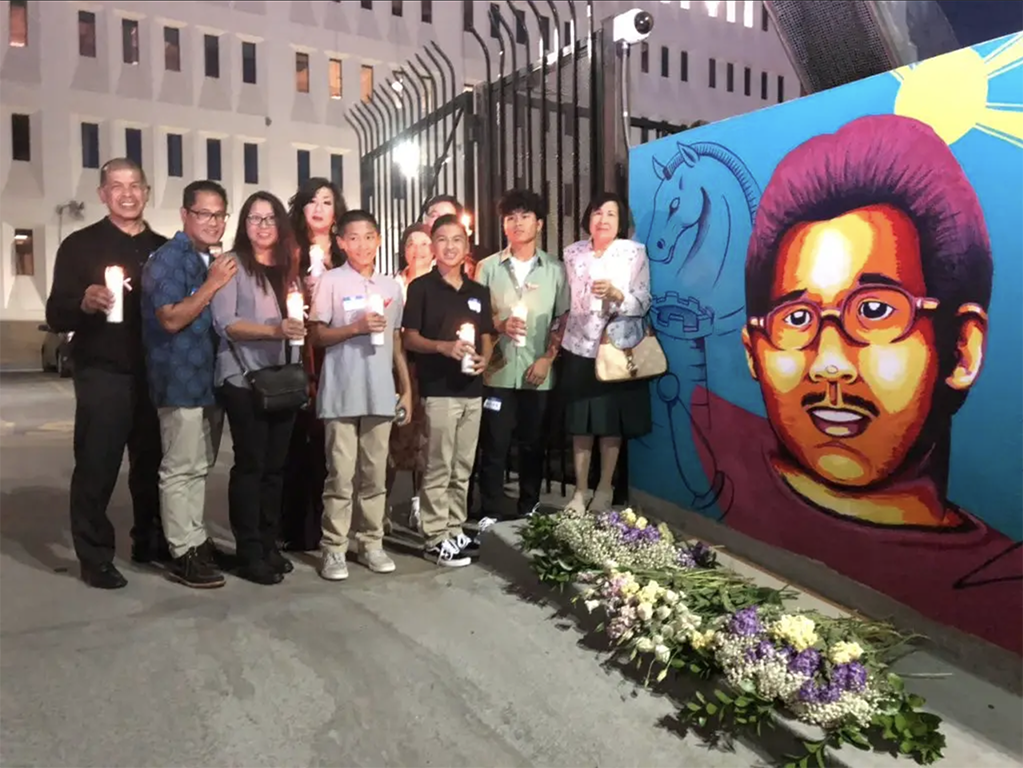
The Ileto family at a candlelight vigil commemorating the 20th anniversary of Joseph Ileto’s death.
Activity 2: Summarizing the Ileto Family's Journey from Grief to Activism
Introduce the case study by telling students the following: “In this lesson, we'll examine the 1999 murder of Joseph Ileto, a Filipino American postal worker. We will learn how hate crimes impact families and communities. We will also learn how ordinary people can become powerful advocates for social change."
Facilitate a whole group discussion by asking the following questions:
How does the author establish the legal framework for defining hate crimes? What is a hate crime? How are hate crimes different from other crimes?
What rhetorical purpose does the detailed character description of Joseph Ileto serve? How does his story enhance the legal definition of hate crimes?
How does the perpetrator's own confession support the hate crime classification? What does his description of Joseph Ileto as a “target of opportunity” reveal about the systematic nature of hate crimes?
How might the intersection of Joseph Ileto's racial identity and federal employment status complicate traditional hate crime analysis?
Split students into five expert groups. Assign each group to a section of the text:
Group 1: Part 2 (pp. 4-5) - “U.S. Media Fails to Cover Hate Crimes Against Asian Americans”
Group 2: Part 3 (pp. 5-6) - “An Ordinary Family Speaks Out to Educate the Public”
Group 3: Part 4 (pp. 6-7) - “Making Hate Crime Victims Visible”
Group 4: Part 5 (pp. 7-8) - “Obtaining Justice for Hate Crime Victims”
Group 5: Part 6 (pp.8-10) - “Tragedy to Activism: Celebrating the Bayanihan Spirit”
Have each group create and present an infographic summarizing the five most important points from their reading section. Encourage students to take notes.
Form student groups with at least one member of each of the five groups so that each group has a person who has read each section of the essay. Have groups work together to complete the worksheet entitled, “Comprehending the Case of Joseph Ileto.” Tell students to refer to student experts of each section and to the essay itself.
Have students complete section 1 entitled, “Understanding the Case” by summarizing the case and identifying the perpetrator’s motivation.
Have students complete section 2 entitled, “Media Coverage and Visibility” by analyzing the media coverage of Ileto’s murder, explaining the significance of the quotation, “Why Can’t They See Us?,” and identifying systemic factors.
Have students complete section 3 entitled, “Family Transformation and Activism” by describing the specific moment that marked the Ileto’s family transition from private grievers to public advocates, defining “bayanihan,” and analyzing the family’s multi-ethnic approach.
Have students complete section 4 entitled, “Justice and Legal Outcomes” by describing the end results of the case.
Have students complete section 5 entitled, “Critical Analysis and Contemporary Connections” by evaluating the efficacy of civil society actors versus institutional actors.
Have students write a reflection given the following prompt: “In learning about the Ileto family’s journey from tragedy to activism, what resonated with you? What lessons from their experience could apply to other social justice issues?”
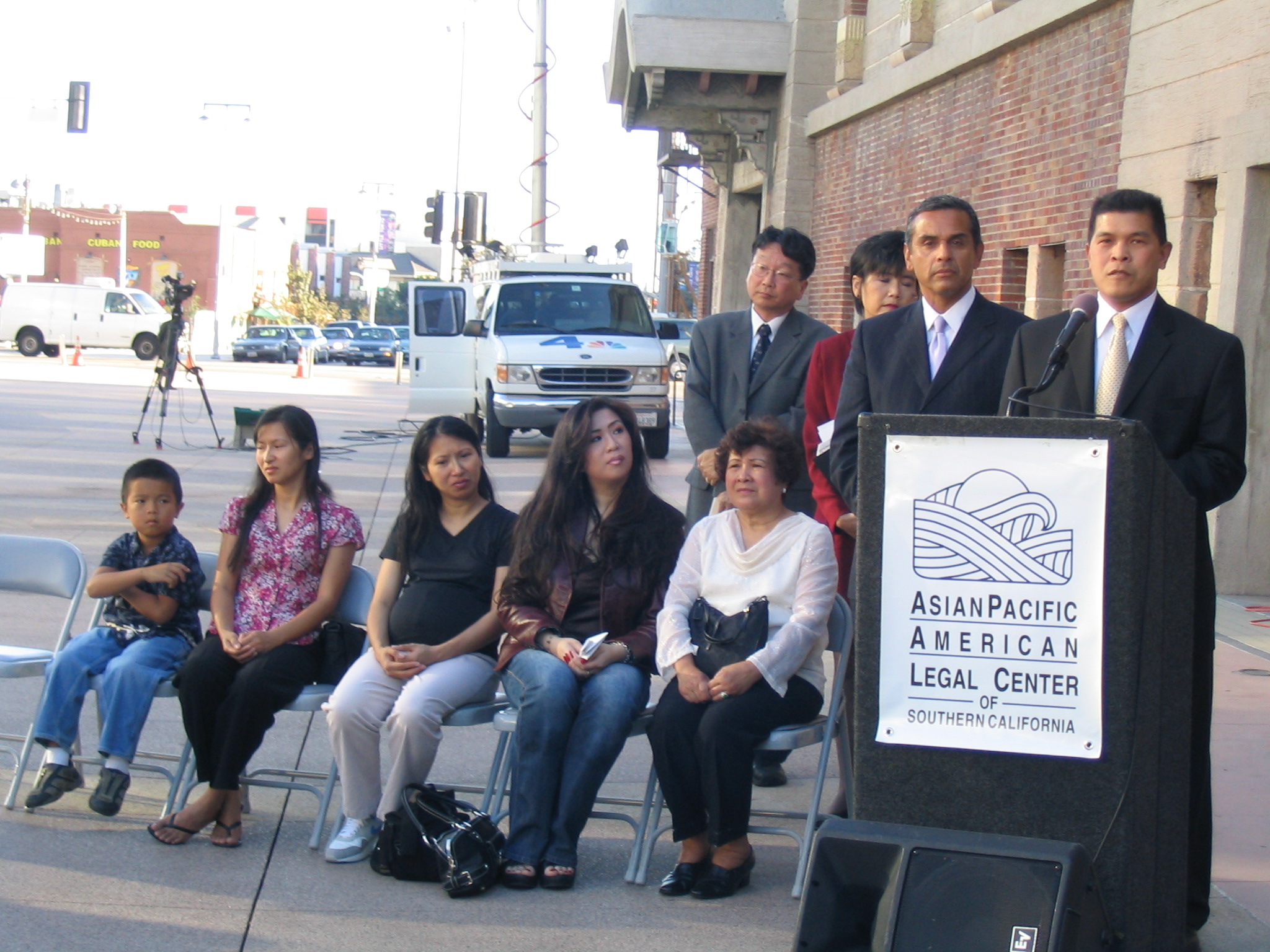
The Ileto family, seated, from left: nephew Kyle, sisters Carmina and Raquel, sister-in-law Deena and mom Lilian. Standing behind the family are, from left, Chris Komai of the Japanese American National Museum, the Hon. Judy Chu, L.A. Mayor Antonio Villaraigosa and Ismael Ileto at the APALC Commemoration Event for Joseph Ileto in August 2005.
Activity 3: Identifying Significant Moments in the Ileto Family Story
Tell students the following: “In this lesson, you will learn about how the Ileto family utilized their power to effect social change.”
Have students analyze the legal definition from 18 U.S.C. § 249. Tell students, “Federal hate crime law requires prosecutors to prove both that a crime occurred AND that it was motivated by bias. Analyze the legal reasoning behind enhanced penalties for hate crimes. What justifications do lawmakers and legal scholars provide for treating bias-motivated crimes more severely than identical acts without bias motivation?”
Distribute a blank piece of paper to each student. Have students draw a large circle on their paper with "Hate Crime" in the center, then brainstorm characteristics or examples of hate crimes around the outside of the circle to create a circle map.
Ask students, "How might a hate crime impact not just the victim, but their entire community?”
Facilitate a discussion about the cause and effects of hate crimes, and the broader social impact.
Tell students the following statement: "The Ileto family went through a transformation after the murder of Joseph Ileto. They moved from being private citizens focused on their own lives to becoming national advocates fighting for justice.”
Review the vocabulary words listed at the top of the page.
Review the goal.
Have students complete Part 1 entitled, “Examining Life before the Hate Crime.” Have students answer the questions and then identify 1-2 key events about the Ileto family’s life before the murder of Joseph Ileto.
Have students complete Part 2 entitled, “Identifying the Turning Point.” Have students answer the questions and then identify the catalyst event that sparked the Ileto family’s transformation from private grief to public advocacy.
Have students complete Part 3 entitled, “Examining the Process of Growth.” Have students answer the questions and then find 1-2 examples of how the family broadened their advocacy work and built multi-ethnic coalitions with other organizations and groups.
Have students complete Part 4 entitled, “Identifying the Impacts.” Have students answer the questions and then identify specific outcomes and concrete impacts on the Ileto family’s advocacy efforts.
Have students complete Part 5 entitled, “Creating a Timeline/Infographic.”
Have students create a comprehensive visual timeline or infographic showing the Ileto family’s transformation from private grief to public advocacy. Tell students to focus on key turning points and partnerships.
Have students do a gallery walk to observe each other's work, using notes to leave feedback or questions on at least three different timelines.
Facilitate a discussion about the video by asking the following questions:
What facts did the video affirm from the text?
What new information did you learn from the video?
Were there any discrepancies between the video and the text? What accounts for these discrepancies?
How was Ismael Ileto impacted by his brother’s murder? How was he driven to activism?
What motivates the Iletos to speak out and work in solidarity for other communities (beyond the Filipino American and Asian American communities)?
In what ways does the video better help you understand the Ileto family’s story? Do you prefer learning from text or video? How so?
How did the visual effects impact your understanding? How do different camera shots affect your understanding of the scene, character emotions, etc.? How do camera angles influence your perception of characters and/or events?
How did the filmmakers’ inclusion and/or exclusion of certain details, perspectives, etc., impact the message?
What is the purpose of this video?
Have students engage in partner talk about the following prompt: “Joseph Ileto’s murder received less media attention than the shooting at the Jewish Community Center, even though they were part of the same hate crime. Why might this be the case?”
Ask students, “The filmmakers opened the film with media coverage of the JCC shooting. Why is it important to contextualize the film within the larger narrative of this hate crime?”
Display the following table for all to see:
Quote
Who said it
What it means
Have students watch the video a second time, this time looking for evidence of how Joseph Ileto’s identity as a Filipino American and Asian American impacted his case. Have students complete the table together using evidence from the video:
Have students identify quotes from the video relating to Joseph Ileto’s identity as a Filipino American and Asian American and write them in the first column.
Have students write who said the quote in the second column.
Have students interpret the quote and write what it means in the third column.
Facilitate a discussion by asking the following questions:
According to those interviewed in the video, why was it important to name and identify Joseph Ileto’s identity as a Filipino American?
What are the implications of the erasure of Joseph Ileto’s racial and cultural identity in the media coverage for larger narratives about Asian Americans? What are the implications for policymaking?
How did the erasure of Joseph Ileto’s racial and cultural identity shape the Ileto family’s desire to build coalitions and support other communities?
Ask students, “What is the significance of this video? Who should see this video? What message is the audience intended to take from the video?”
Have students choose one target audience for the film (e.g., high school students.). Have students write a letter to a person representing their target audience (e.g., high school teachers or principals) explaining why they should watch the film. Have students include a synopsis of the film in their letter.
Activity 5: Analyzing Change and Continuity in Response to Anti-Asian Hate
Tell students the following statement: “A hate crime is a criminal offense committed against a person, property, or society which is motivated, in whole or in part, by the offender’s bias, against a given race, religion, disability, sexual orientation or ethnicity/national origin. Hate crimes target victims because of what they represent, not personal conflicts. It is intended to intimidate entire communities, not just individuals.”
Ask students the following question: “How do hate crimes impact both victims and communities? How did the hate crime against Joseph Ileto impact his family and his community and society-at-large?”
Tell students, “Continuity refers to patterns, practices, or conditions that remain the same over time. In relation to hate crimes, continuity might include the types of violence used, the motivations behind attacks, or how communities respond to incidents. Change refers to developments, shifts, or transformations that occur over time. In relation to hate crimes, change might include new laws being passed, different levels of media coverage, or evolving public awareness about bias-motivated violence. Most historical issues show both continuity and change simultaneously. As we examine anti-Asian hate crimes from the 1980s through today, you'll need to identify both what has remained consistent and what has transformed over these decades.”
Tell students, “We read about Joseph Ileto's murder in 1999. In this activity, we'll see how anti-Asian hate crimes connect across different time periods. As we watch videos about anti-Asian hate crimes from 1982, 1999, and 2021, look for what has stayed the same AND what has changed."
What similarities do you notice between Vincent Chin’s case and Joseph Ileto’s case?
How did the community respond to Vincent Chin’s murder?
What does this suggest about anti-Asian hate crimes over time?
Show the video entitled, “Asian American community battles surge in hate crimes stirred from COVID-19.” Tell students, “This covers recent anti-Asian hate crimes. Pay attention to how media coverage and public awareness have changed since the Ileto case.” Have students respond to the following questions in the section entitled, “Video 2”:
How does current media attention compare to what the Ileto family experienced in 1999?
What new factors contributed to anti-Asian hate during COVID-19?
How did communities and organizations respond differently than in previous decades?
What evidence shows that media coverage has improved or stayed the same?
Tell students to engage in partner talk and state the following: "Based on this video and the Ileto reading and video, has media coverage of anti-Asian hate crimes improved? What evidence supports your answer?"
Show the video entitled, “8 killed in shooting spree at Atlanta spas.” Tell students, “This 2021 case targeted Asian American women. Consider how this case fits into the broader pattern we've been studying. This discusses recent violence against Asian American women. We'll focus on analyzing the response and media coverage.” Have students respond to the following questions in the section entitled, “Video 3”:
How did the public and media response compare to earlier cases?
How does this case connect to the issues the Ileto family raised about visibility?
What role did social media play in the response to this incident?
What new voices or perspectives emerged in discussions about this case?
Ask, “How did the public and media response compare to earlier cases? How does this case connect to the issues the Ileto family raised about visibility?”
Have students respond to the questions at the bottom of the worksheet. Facilitate a class discussion using students’ responses to the questions:
What patterns do you see emerging about anti-Asian hate crimes across these decades?
What surprised you most about the differences in how these three time periods handled anti-Asian hate crimes?
How has your understanding of Asian American experiences changed?
What role does media coverage play in determining which hate crimes receive public attention?
Based on these three cases spanning 40 years, what do you predict will be different about how society responds to anti-Asian hate crimes in the future?
Have students complete the second row by describing the Asian American community’s responses to the three cases: Chin, Ileto, and Atlanta Spa Shooting.
Have students complete the third row by describing the larger American society’s responses to the three cases: Chin, Ileto, and Atlanta Spa Shooting.
Have students complete the last row by describing the media coverage of each of the three cases: Chin, Ileto, and Atlanta Spa Shooting.
Have students complete the last column by analyzing the responses in the previous columns for each event and identifying whether they see a continuity or a change. Have students include a justification of their thinking.
Facilitate a discussion by asking students the following questions:
How was the Ileto family’s experience impacted by previous cases? How did it impact future cases? How is the Ileto family’s experience connected to a 40-year pattern of anti-Asian hate crimes?
What do the patterns of continuity and change in anti-Asian hate crimes from 1982-2021 teach us about how to create lasting social change?
Based on the evidence you've gathered, what has been most effective in fighting anti-Asian hate crimes over the past 40 years? What makes you say that?
The Ileto family chose education and coalition-building as their main strategies. How well did these approaches address the patterns of continuity you identified?
What do the things that have NOT changed tell us about the root causes of anti-Asian hate? What would it take to break these persistent cycles?
Why is it important for activists and advocates to understand what has remained continuous over time? How might this knowledge change their strategies?
Some argue that progress has been slow. Others point to increased awareness and new laws. Which perspective does the evidence support?
How does identifying patterns of change give us hope or guidance for future advocacy? What would happen if we ignored these patterns?
How and why is this data set limited in analyzing continuity and change?
Have students reflect and respond to the following prompt either in small discussion groups or via journaling: “Based on what you've learned about how hate crimes have persisted over decades, identify one specific action you could take in your school, neighborhood, or community to challenge bias or discrimination when you witness it. Explain how understanding that some patterns of hate have remained continuous while others have changed over time influences your choice of action and your expectations for creating change.”
Activity 6: Developing an Action Plan
Tell students the following statement: “An activist is a person who uses or supports strong actions (such as public protests) in support of or opposition to one side of a controversial issue. The Ileto family became activists against hate crimes.””
Display the following chart and have students summarize what they learned about the Ileto family’s action plan for social change.
What was the problem? What motivated the Ileto family to become activists?
Who was involved? Who led the change?
What strategies were utilized? How was social change achieved?
What were the impacts of the efforts?
Have students engage in partner talk given the following prompt: “In what ways does the Ileto family’s story inspire you to take action?”
Have students work in small groups and discuss the following questions:
What is an event that inspires you to create social change?
What issues or problems does this event encompass?
What is a specific problem you are interested in resolving?
Who is impacted?
Who do you need to engage?
What are your main goals or desired outcomes?
What strategies will you employ to achieve your goals?
Have student groups write a one-page summary to pitch their action plan to the entire class. Have the class vote on the best pitch. Consider having students work as a class to enact a social change movement.
Facilitate a closing discussion on the following question, “How has learning about the Ileto family's story changed your understanding of activism? How can you incorporate activism into your lives?”
Extension Activities
Have students create a "then and now" comparison examining hate crime legislation before and after the Ileto case. Have students track specific policy changes and evaluate their effectiveness in preventing bias-motivated violence.
Have students research and analyze the role of technology and social media in social change movements.
Have students research another example of a family advocating for social change after being impacted by a tragedy. Have them identify their motivations, their social causes, and their action plans.
Apply civic virtues and democratic principles when working with others.
D2.Civ.10.9-12:
Analyze the impact and the appropriate roles of personal interests and perspectives on the application of civic virtues, democratic principles, constitutional rights, and human rights.
D2.His.1.9-12:
Evaluate how historical events and developments were shaped by unique circumstances of time and place as well as broader historical contexts.
D4.6.9-12:
Use disciplinary and interdisciplinary lenses to understand the characteristics and causes of local, regional, and global problems; instances of such problems in multiple contexts; and challenges and opportunities faced by those trying to address these problems over time and place.
Determine the central ideas or information of a primary or secondary source; provide an accurate summary of how key events or ideas develop over the course of the text.