1.6.3.1 - The Sikh Turban
The Asian American Education Project
All lesson plan content is owned by The Asian American Education Project (AAEdu) and source content is owned by Sikh American Legal Defense and Education Fund (SALDEF) and Sikh American History Project (SAHP). Users agree to attribute work to AAEdu, SALDEF, and SAHP.
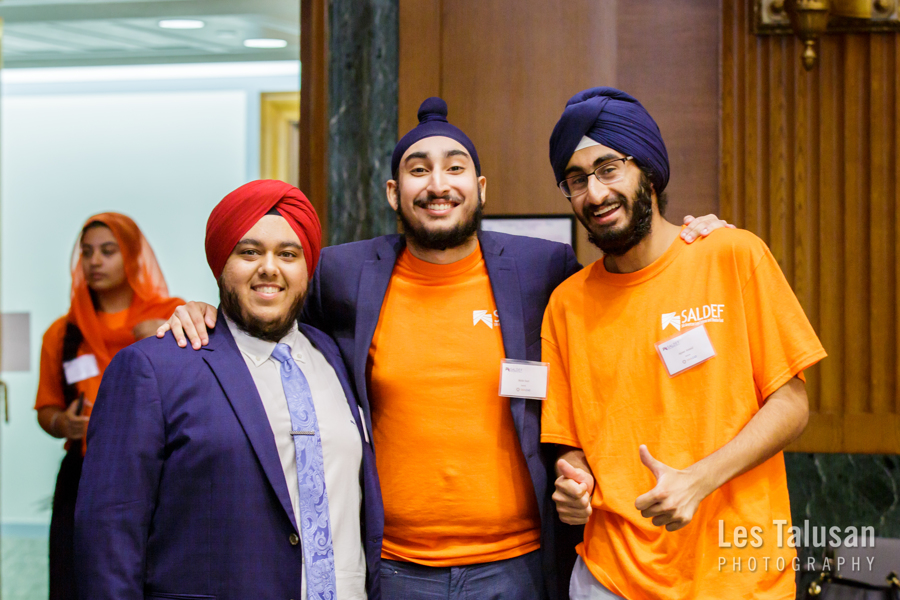
Representatives from SALDEF at Langar on the Hill. Langar is a shared, communal meal service open to those of all backgrounds and beliefs, built on the practice of Seva, or acts of selflessness.
Les Talusan Photography, Courtesy of
SALDEF
Grade: K-2Subject:
Social Studies, English Language Arts
Number of Lessons/Activities: 5
The Sikh turban represents the values of faith, equality, and justice. When Sikh immigrants began arriving in the United States in the late 1880s as laborers, many continued to wear turbans. In this lesson, students will learn about the concepts of faith, equality, and justice, and share ideas or examples of what each word means to them.
Students will:
- Explain what a Sikh turban is and what it represents.
- Describe the concepts of faith, equality, and justice.
Sikhism is the world’s fifth largest religion. Some people practice Sikhism. They are called Sikhs. The word “Sikh” means “student.” They are students of
gurus. Gurus are spiritual leaders. There are ten Sikh Gurus. They guide the Sikh faith. They are God’s messengers.
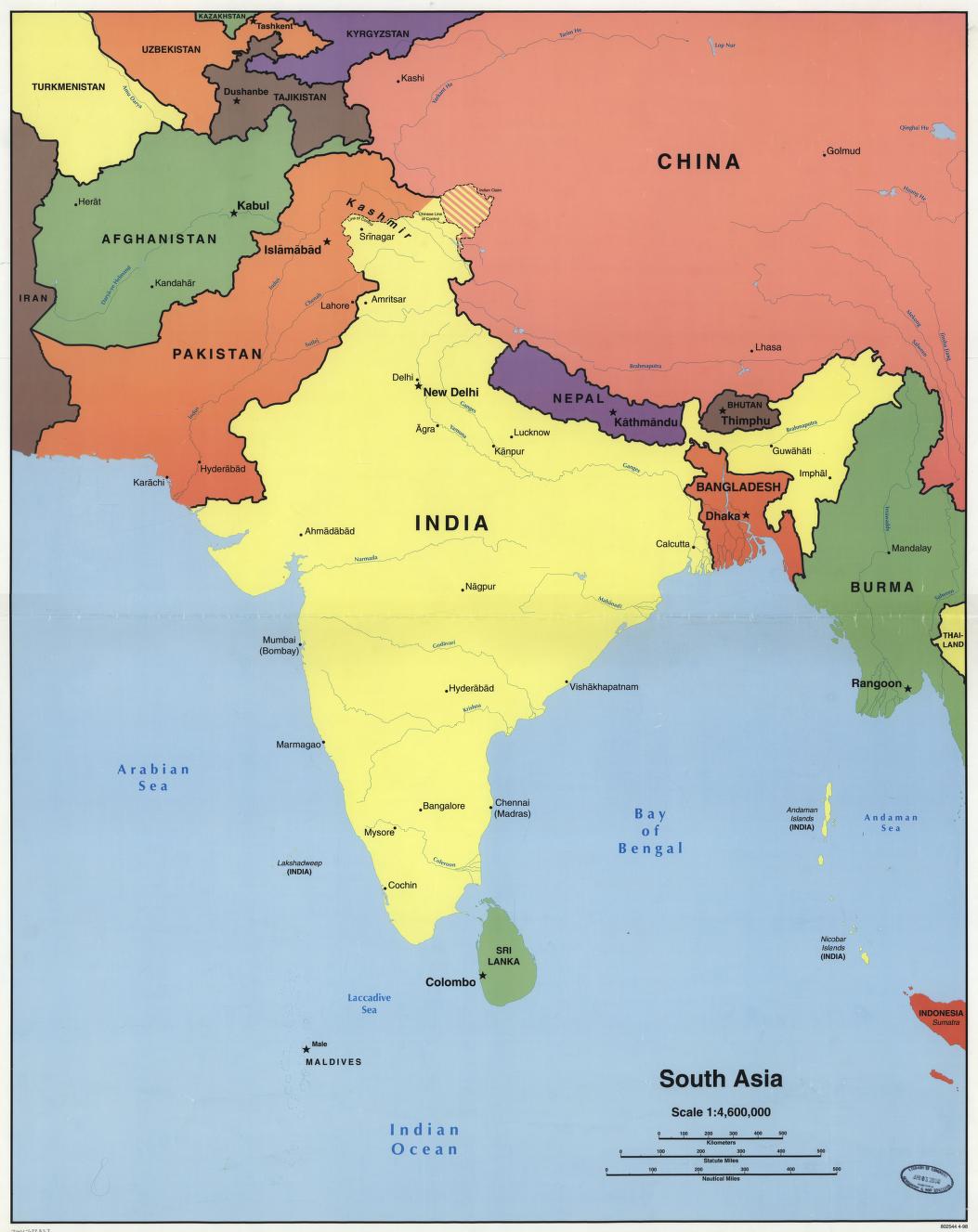
Most Sikh Americans are from Punjab. Punjab is a region. It’s in northern India. It means “land of the five rivers.”
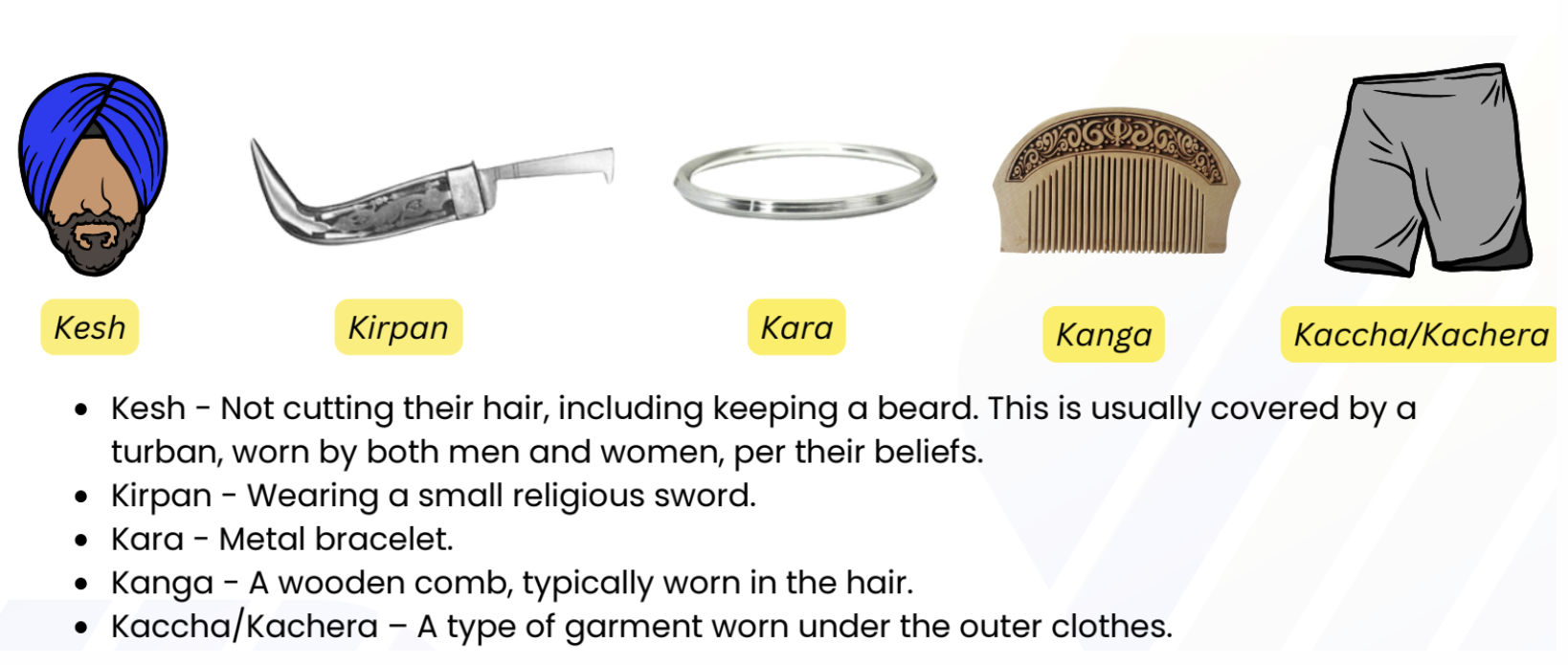
Sikhs practice five
articles of faith.* One of them is
Kesh. This means uncut hair. Sikhs keep long hair. They believe hair is a living thing. They believe hair is a gift of God. Not cutting hair shows their devotion to God.
Many Sikhs wear a
turban. Turbans cover their uncut hair. Men wear turbans. Women can too. Traditionally, turbans were worn by kings and queens in India. Today, any Sikh can wear them.
A turban is a long piece of fabric. To put one on, one must first fold the cloth. Then, one must wrap it around their head. A
patka is a smaller version of a Sikh turban. It is usually worn by boys. During their teen years, boys will switch to wearing turbans.
The turban is a
symbol of faith, equality, and justice.
Faith means strongly held beliefs. This can include a belief in God.
Equality means treating everyone the same. No one is higher or better than someone else.
Justice means treating people fairly.
People of many religions wear symbols of their faith. For example, some Christians may wear a cross. Some Muslims may wear a
hijab. Some Jews may wear a
kippah.
Sikh
immigrants began coming to the United States in the late 1880s. Most were farmers. Some worked in
lumber mills. Some worked on railroads. They worked hard. They adapted to life in America. They continued to wear turbans. This made them stand out. Some people treated them poorly. They said Sikhs did not belong in America. But this is not true. Sikhs are proud of who they are. They kept their faith.
*Note: In Sikhism, there are five “articles of faith” that are worn or carried as a symbol of their faith: Kesh (uncut hair), Kirpan (religious sword), Kara (metal bracelet), Kanga (comb), Kaccha/Kachera (under-shorts). Each is worn as a symbol of their commitment to their faith.
Bibliography:
Andersen, Erika Surat, director. Turbans. Different Drum Productions, 2000. 30 min.
Scheffauer, Herman George. (1910). “A Tide of Turbans.” The Forum.
- Article: a member of a group of things, for example a sweater is an article of clothing
- Equality: the idea that everyone should be treated the same
- Faith: strongly held beliefs, including religious beliefs
- Guru: a Sikh spiritual leader
- Hijab: a covering for the hair and neck that is worn by some Muslim women
- Immigrant: a person who comes to a country to live there permanently
- Justice: the idea that people are treated fairly
- Kippah: a small skullcap worn by some Jewish people (also called a yarmulke)
- Lumber: logs or wood usable for building
- Patka: a smaller version of a Sikh turban worn by Sikh children
- Sikhism: a religion founded by Guru Nanak in South Asia**
- Symbol: something that stands for or represents something else
- Turban: a head covering consisting of a long cloth that is wrapped around the cap or head
** Definition adapted from
SALDEF
- What is Sikhism?
- Who are Sikhs?
- Why do some Sikh people wear turbans?
- What does the turban symbolize?
- What jobs did Sikh immigrants have when they first arrived in the United States?
- Why were Sikhs sometimes treated poorly?
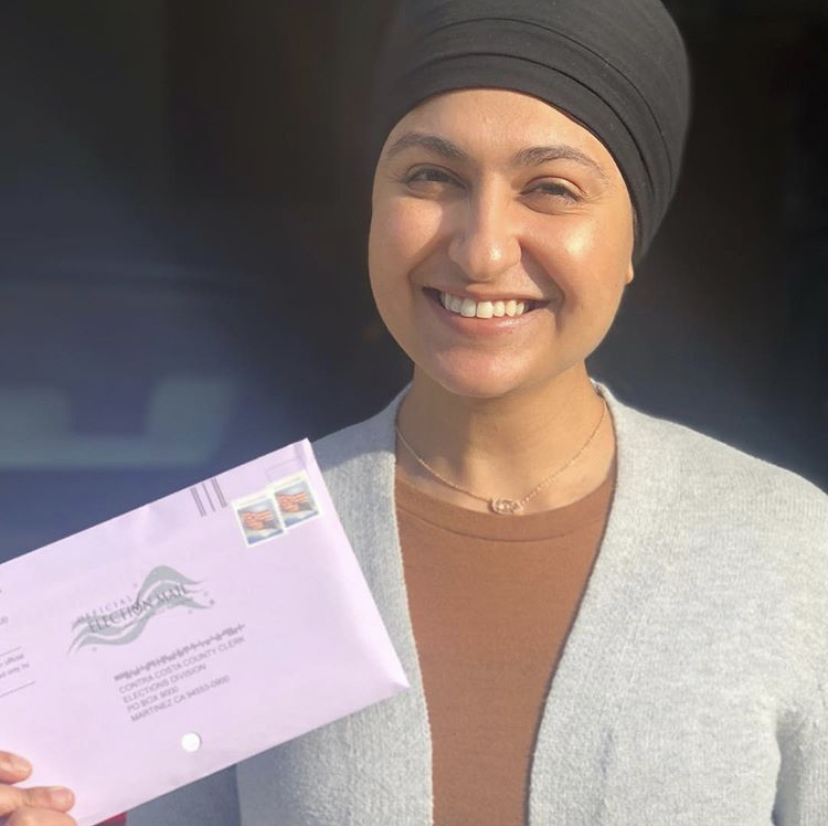
A Sikh voter preparing to vote.
Activity 1: Connecting Symbols and Sense of Belonging
- Have students look at what they are wearing. Have them describe what they are wearing and why to a partner.
- Ask students the following question: “What are you wearing today that has a special meaning to you?”
-
Tell students the following statement: “We wear clothes to protect our bodies and cover our skin. Sometimes, clothes and other items we wear can have special meanings. A symbol is something that stands for or represents something else.”
- Ask students the following question: “What symbols are you wearing today?” (Make sure to note that logos are also symbols.)
- Ask students the following questions: “Why do sports teams wear the same uniforms? Why do schools have mascots? How do these things create a sense of belonging?”
Punjab is a region in northern India. It means “land of the five rivers.”
Library of Congress, Geography and Map Division
Activity 2: Locating Punjab
- Have students watch the SALDEF video entitled, “Who are Sikhs?”:
- Have students turn and talk and share one fact that they learned from the video.
- Have a few students share aloud what they learned.
- Have other students give a thumbs up if they heard that same fact too.
- Show students a map of Punjab, India.
- Ask students if anyone has been to India.
- Locate Punjab, India, and Pakistan on a globe, or show Punjab, India on Google Maps.
- Tell students the following statement: “Punjab refers to a large region in South Asia. It includes parts of India and Pakistan.”
- Have students identify any special features of the area (i.e., five rivers, borders, etc.).
- Tell students the following statement: “Many Punjabis, or people from Punjab, came to the United States in the late 1880s. Many of them were Sikhs.”
- Show students the images on the first page of the SALDEF publication entitled, “Who Are Sikhs?” Ask students what they notice and wonder. Write down their comments and display them for all to see.
- Tell students the following statement: “Some people in the images are wearing a head covering called a turban. Turbans are worn by many Sikh Americans. We will be learning more about Sikh turbans today.”
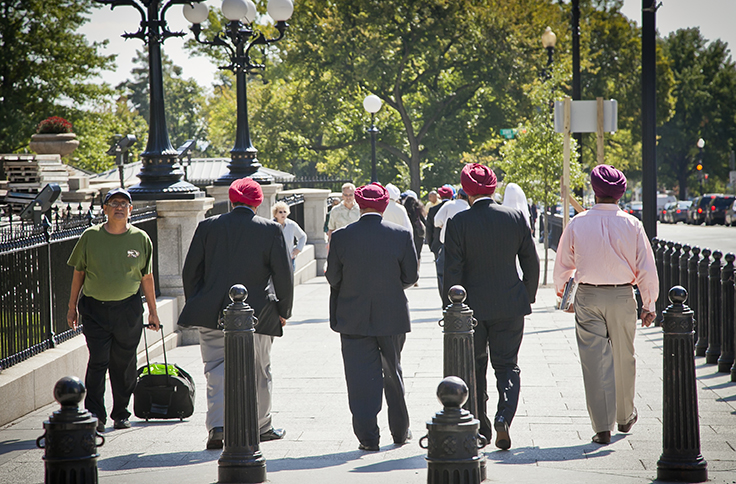
A group of four Sikhs walking.
Activity 3: Defining a Sikh Turban
- Have students read the essay. Consider the following options:
- OPTION 1: Create a slide deck with the essay content and add visuals. Read it aloud to the students.
- OPTION 2: Write each section on large chart paper. As you read each section aloud, draw visuals in collaboration with the students.
- Facilitate a class discussion by asking students the Discussion Questions.
- Have students watch the SALDEF video entitled, “Why Sikhs Wear a Turban EXPLAINED + 5 Sikh Articles of Faith”
- Have students turn and talk and share one fact that they learned from the video.
- Have a few students share aloud.
- Have other students give a thumbs up if they heard that same fact too.
- Have students make a list of head coverings. Record student responses and display them for all to see.
- Have students sort the head coverings into two categories: “Similar to Turbans” or “Not Similar to Turbans.”
- Have students sort head coverings (i.e., hijabs, yarmulke) that are significant to a religion or culture in the “Similar to Turbans” category.
- Have students sort head coverings (i.e., baseball caps, hats) that are not significant to a religion or culture in the “Not Similar to Turbans” category.
- Tell students the following statement: “Turbans are tied to a religion or culture. They symbolize identity. They are not fashion statements.”
- Have students complete the worksheet entitled, “A Sikh Turban.” Have students finish this sentence: “A Sikh turban is ___.” Have students draw a corresponding picture.
Activity 4: Defining Faith, Equality, and Justice
- Reread this paragraph from the essay: “The turban is a symbol of faith, equality, and justice. Faith means strongly held beliefs. This can include a belief in God. Equality means treating everyone the same. No one is higher or better than someone else. Justice means treating people fairly.”
- Create the chart below and display for all students to see. Repeat the definition of each word and have students share ideas or examples of what each word means to them. Record their ideas on the chart.
- Have each student choose one of the three words (i.e., faith, equality, or justice).
- Have students draw a picture of what the word means to them.
- Have students write or share a personal example from their own life that represents that word.
Facilitate a discussion by asking the following questions:
- Why are faith, equality, and justice important to you?
- Why are faith, equality, and justice important to the community?
- One of the many ways that Sikhs show their commitment to faith, equality, and justice is by wearing a turban. What is one way you show your commitment to these ideas?
Activity 5: Analyzing the Importance of Symbols
- Have students choose an object that serves as a symbol of something important to them.
- Host a “Show and Tell” activity. Have each student present their objects by addressing the following questions: “What is your object? What does your object symbolize? How so?”
- Facilitate a discussion by asking the following questions:
- How would you feel if someone made fun of you or treated you poorly because of your object?
- How would you feel if someone did not respect your object?
- Why is it important to show respect toward Sikhs who wear turbans?
- Read aloud one of the following books:
- Hair Twins by Raakhee Mirchandani and illustrated by Holly Hatam (Little, Brown Books for Young Readers, 2021)
- The Many Colors of Harpeet Singh by Supriya Kelkar and illustrated by Alea Marley (Union Square Kids, 2019)
- Show the video entitled, "PBS Kids | Sikh Patka (Turban) Stands for Equality." Ask students the following question: “How do you remind yourself to treat people equally and fairly?”